

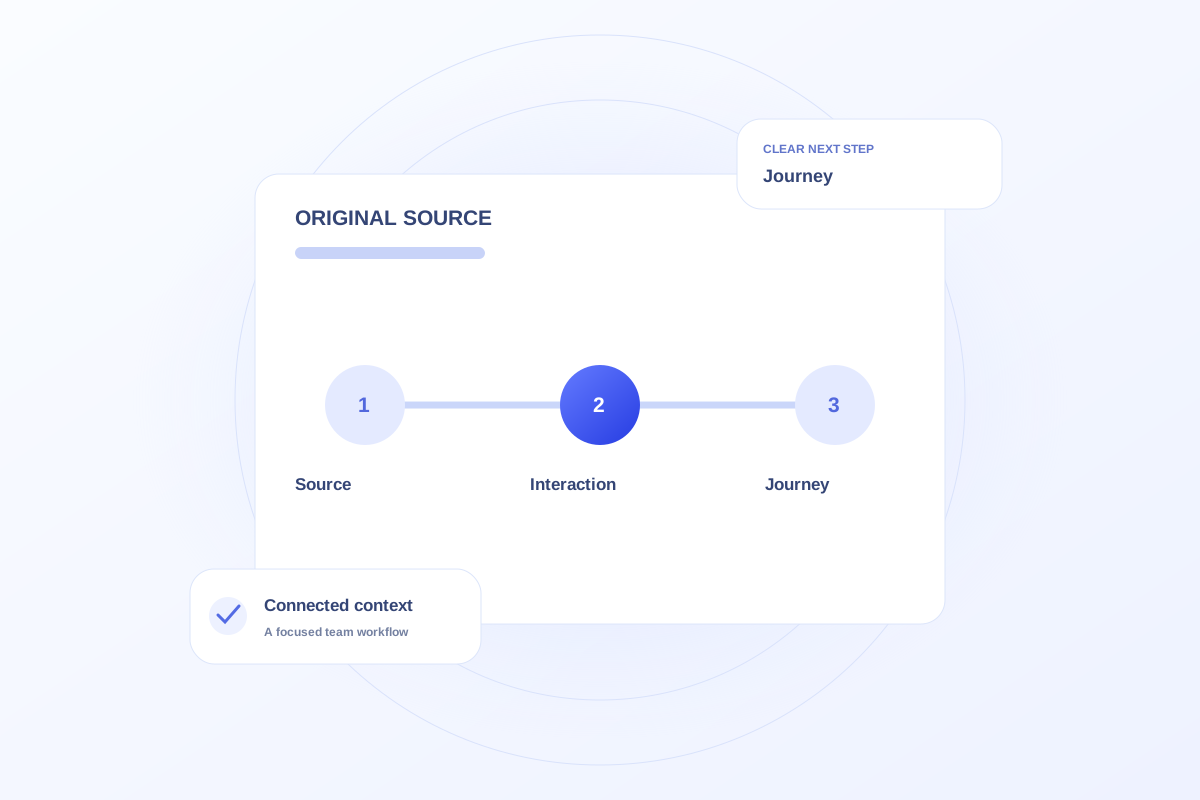
The original acquisition source explains how the patient journey began. Later bookings, calls, and shared-care handoffs describe subsequent activity. Preserving the source makes acquisition reporting easier to interpret and reduces the risk of treating a new interaction as a new inquiry.
Separate origin from later interactions
A patient may discover the practice through a provider, submit an online form, speak with a coordinator, and book an evaluation. Those events describe one possible journey, not necessarily four acquisitions. Record the source and arrival method as different concepts.
Do not replace the original source simply because the most recent interaction used another channel. If the original entry was wrong, correct it through an agreed process that preserves an explanation of the change.
Define how unknown sources are handled
Unknown information should remain visible until it can be verified. Guessing a source from the last page visited or the person handling the record introduces assumptions into reports.
Agree on who can correct source data and how the practice reviews repeated unknown entries. The aim is a defensible record, not a report in which every field looks complete.
Connect the journey in the workspace
Ovrflo’s demo distinguishes referral acquisition, direct-patient inquiry activity, bookings, and handoffs. Explore linked records to see why the source and the next action answer different questions.
Live attribution needs confirmed data collection and matching rules. The public demo is not connected to analytics feeds and does not prove that a particular campaign caused a patient inquiry.
Your working checklist
- Record origin separately from later interactions.
- Keep arrival method distinct from acquisition source.
- Leave unknown sources visible until verified.
- Define who can correct source records.
See the workflow in Ovrflo.
Explore the related workspace with fictional data, then discuss what your team would need in practice.