

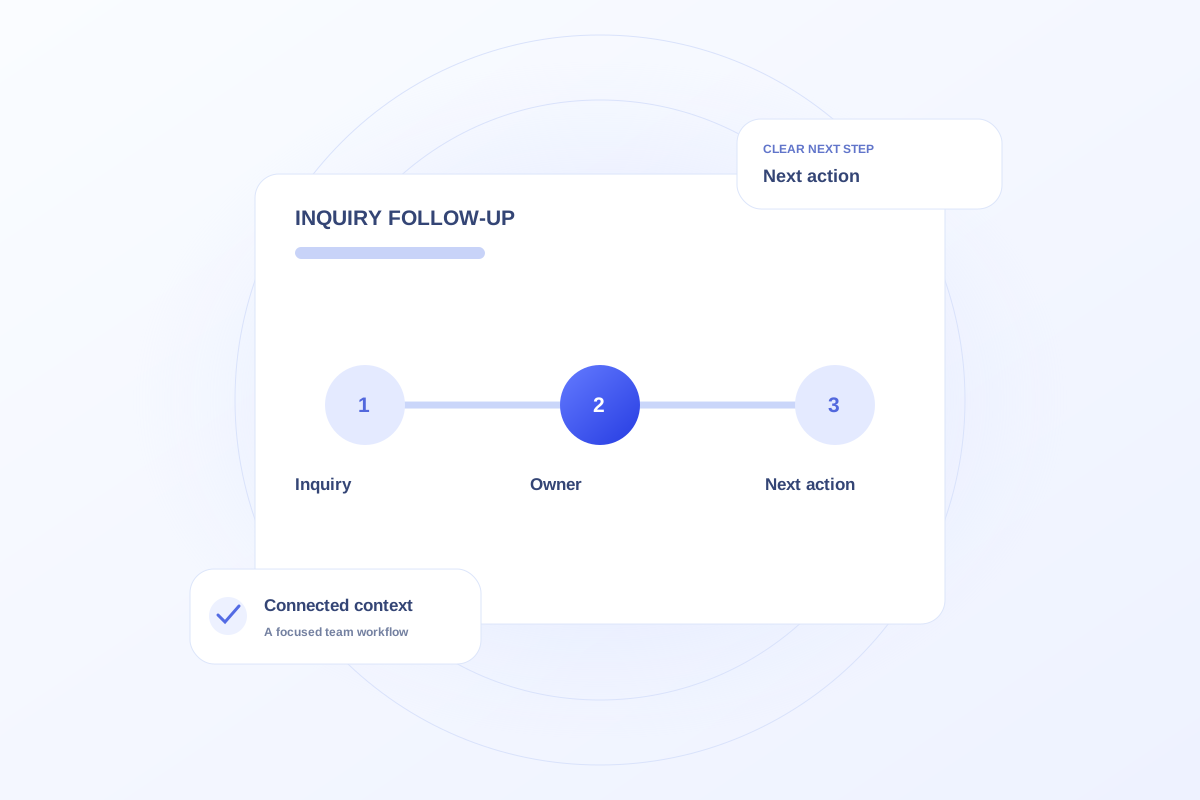
A patient inquiry follow-up workflow should record how the inquiry arrived, its original source, current stage, responsible coordinator, and next action. Define how the team reviews inquiries waiting for a response and how ownership changes. Keep communication within the practice’s approved patient-contact process.
Define what happens after an inquiry arrives
Identify who reviews a new inquiry and what information they need to decide the next administrative step. Separate an incomplete inquiry from one that is ready for appointment coordination. Do not infer a clinical recommendation from a marketing form.
Use approved intake procedures for any patient-specific information or clinical questions. A general workflow guide cannot set a clinical priority or determine the appropriate care pathway.
Make the next action explicit
Record a specific administrative action with an owner and due date. “Review appointment options with the patient” provides more direction than “follow up.” Preserve the source and current stage while the work progresses.
When a coordinator is unavailable, transfer the action with its context. A patient record should not appear owned simply because it still carries the name of someone who is absent.
Review the waiting work
Ovrflo’s Patient Intake demo shows inquiries, stages, bookings, and follow-up context. Explore a fictional inquiry and ask whether the next step is clear without searching another list.
The demo does not send patient messages or connect to a live intake form. Discuss communication, access, and integration requirements before using a comparable production workflow.
Your working checklist
- Define new-inquiry review responsibility.
- Keep the original source with the record.
- Assign a concrete next action and owner.
- Use approved clinical and patient-contact processes.
See the workflow in Ovrflo.
Explore the related workspace with fictional data, then discuss what your team would need in practice.