

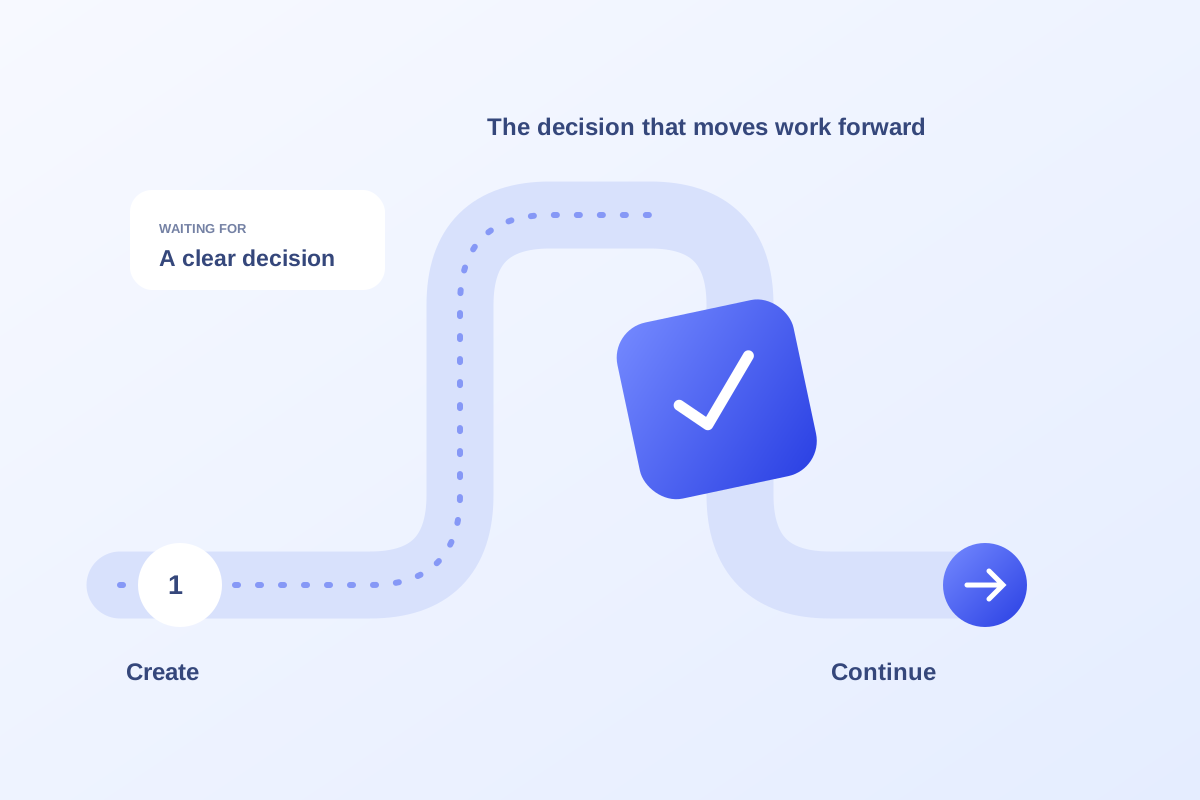
Find an approval bottleneck by identifying the deliverable waiting for a decision, the person authorized to decide, and the information they still need. Separate review time from production time. Assign the next action to the person who can resolve the dependency rather than repeatedly moving the creator’s deadline.
Trace the dependency instead of chasing the task
Start with the work that cannot proceed. Ask what decision is missing and whether the request actually reached the right reviewer. A designer waiting for approved wording has a different problem from a reviewer waiting for a complete brief.
For a fictional patient education handout, distinguish factual review, design approval, and permission to publish. One person may handle several decisions, but a single “approved” label should not conceal an unfinished review.
Make the review request answerable
Give the reviewer the specific version, the decision required, the deadline, and any constraints. Identify whether they are confirming accuracy, choosing between options, or authorizing the next step. Avoid asking for broad feedback when one concrete decision would unblock production.
Patient-facing clinical claims still need the practice’s appropriate reviewers. A task workflow can clarify the request but cannot replace their judgment. If the reviewer is unavailable, ask the authorized team who can provide coverage.
Record the next action with its owner
Ovrflo’s Marketing tasks can hold an owner, date, notes, and project context. Use the demo to separate a production task from the approval work it depends on. This is a way to make the dependency understandable, not an automatic approval engine.
At the weekly review, confirm whether the decision was made and what changed. The public demo does not send approval requests, enforce clinical review, or notify colleagues; use fictional records to evaluate the planning workflow.
Your working checklist
- Identify the exact missing decision.
- Confirm who is authorized to make it.
- Provide the version, scope, and deadline for review.
- Update the dependent work after the decision.
See the workflow in Ovrflo.
Explore the related workspace with fictional data, then discuss what your team would need in practice.