

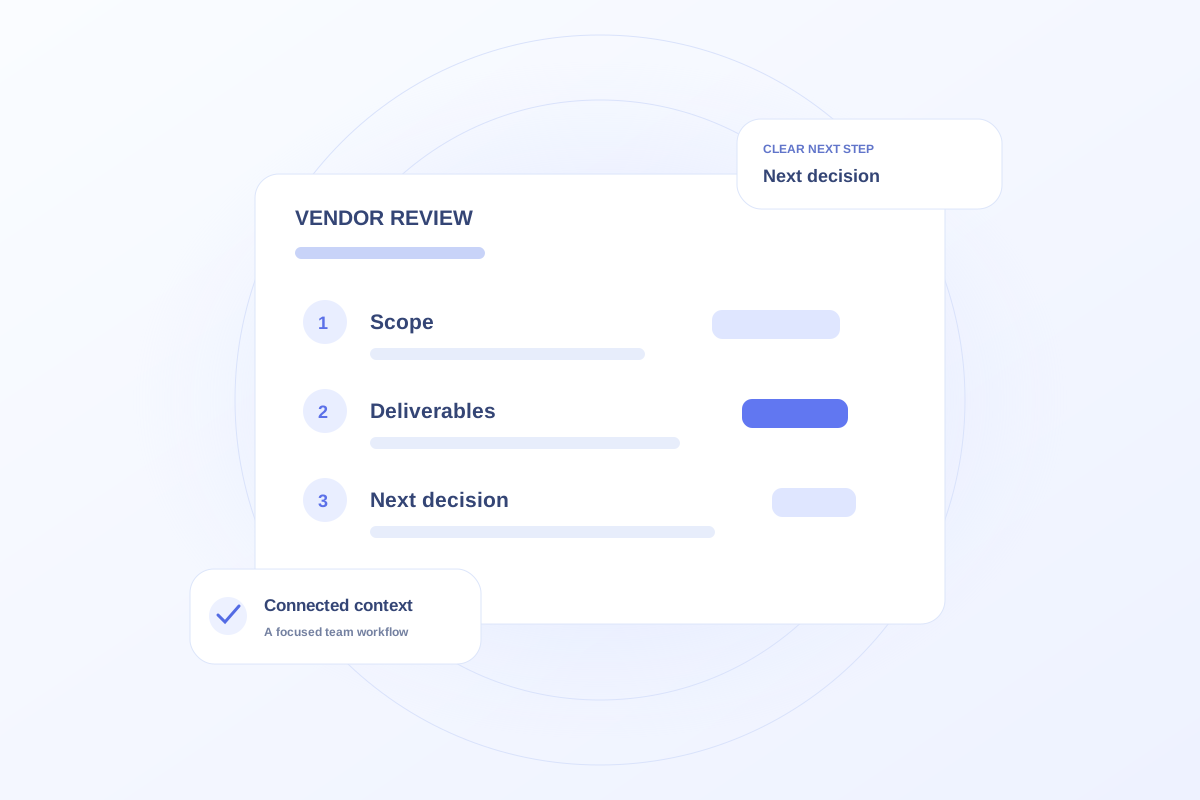
A marketing vendor review should compare the agreed scope with delivered work, clarify unresolved issues, review recorded expenses, and identify the next decision. Discuss measurement definitions before judging performance. Keep the review focused on evidence your practice can inspect, rather than a presentation of unexplained totals.
Bring the agreement and the work
Collect the relevant scope, deliverables, project notes, and open tasks before the meeting. Separate work the vendor owns from approvals or information your practice must supply. An unresolved internal approval can look like a vendor delay if nobody records the dependency.
A useful agenda names each outstanding item, its owner, and the date of the next action. If the discussion changes the scope, record that change and confirm it through the practice’s normal approval process.
Ask what each result means
Identify the source and period behind reported inquiries, bookings, and website activity. Ask whether a report counts unique inquiries or appointment events, and whether it includes provider referrals. Different definitions can produce different totals without either report being wrong.
Treat spending and outcomes as separate records until there is a defensible way to connect them. A payment to a vendor is evidence of an expense, not evidence that the vendor caused a particular patient booking.
Leave with an owned decision
Ovrflo brings vendor details, projects, tasks, and expenses into the Marketing workflow. Explore a vendor record, identify a related task, and use that context to prepare a review.
After the conversation, record the decision, responsible person, and follow-up date. Contract interpretation, payment authorization, and vendor communication still follow your practice’s own processes.
Your working checklist
- Check scope and deliverables before the review.
- Separate internal dependencies from vendor commitments.
- Ask for source definitions and reporting periods.
- Record the next decision and its owner.
See the workflow in Ovrflo.
Explore the related workspace with fictional data, then discuss what your team would need in practice.