

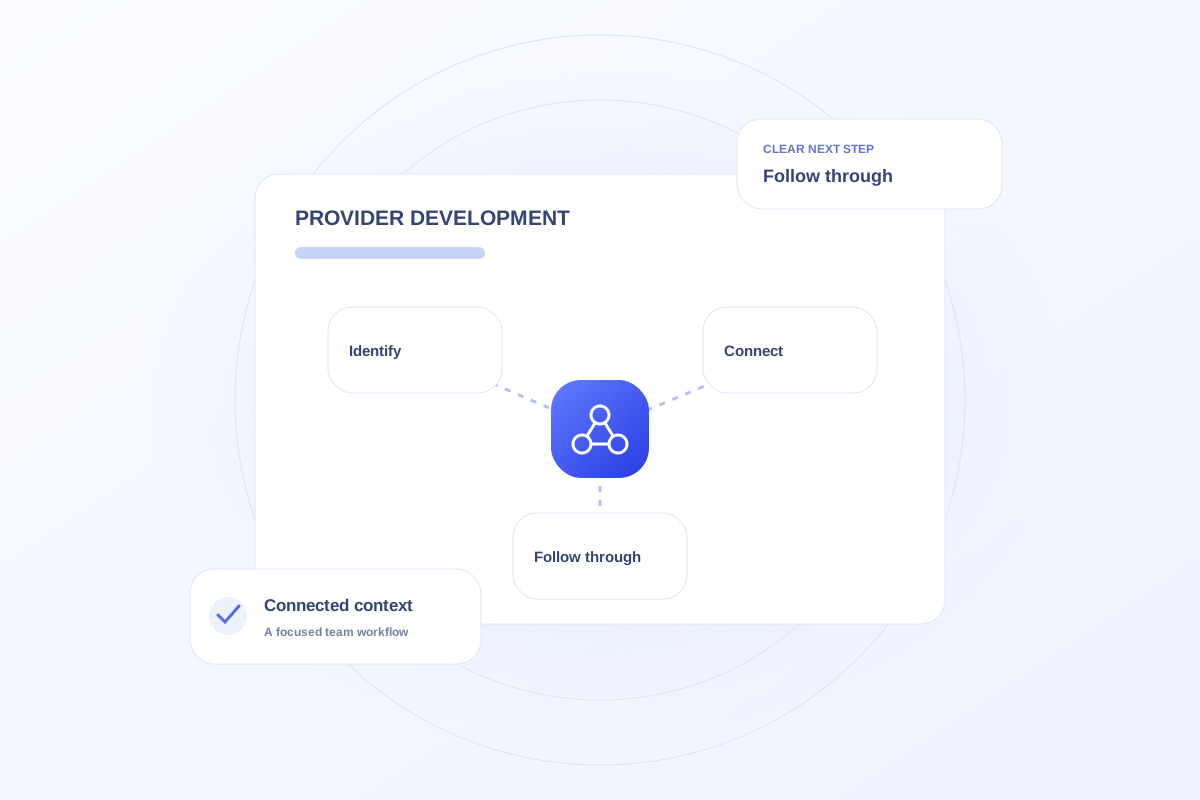
Define provider-development stages by observable relationship progress, such as an office identified, a conversation arranged, or an introduction completed. Write an entry and exit condition for each stage. Keep relationship development separate from clinical referrals and avoid treating a stage as a promised referral outcome.
Choose stages the team can apply consistently
A label such as “engaged” can mean different things to different liaisons. Describe the event that supports the label and what the next stage requires. Review examples together before using the pipeline to compare workloads.
A fictional office with an introductory conversation scheduled has progressed differently from an office whose contact details have only been collected. The stages should reflect that distinction.
Attach a next action to stalled records
A stage shows context; a task creates an actionable commitment. Record who will arrange the next conversation and when the team will review it. If there is no appropriate next action, explain why the relationship remains in the stage.
Do not move a record forward merely to make a report look current. A pipeline is useful when it reflects recorded activity rather than optimism.
Review development alongside relationship history
Ovrflo’s Co-management demo includes provider-development and outreach views. Explore how a prospect’s stage and the next scheduled work answer different questions.
Use the workflow to discuss a consistent team process. It does not establish that an office will refer, and the public demo’s relationship and referral figures are fictional.
Your working checklist
- Define stage entry and exit conditions.
- Use observable activity to support stage changes.
- Assign a next action to active development work.
- Keep development stages separate from referral outcomes.
See the workflow in Ovrflo.
Explore the related workspace with fictional data, then discuss what your team would need in practice.