

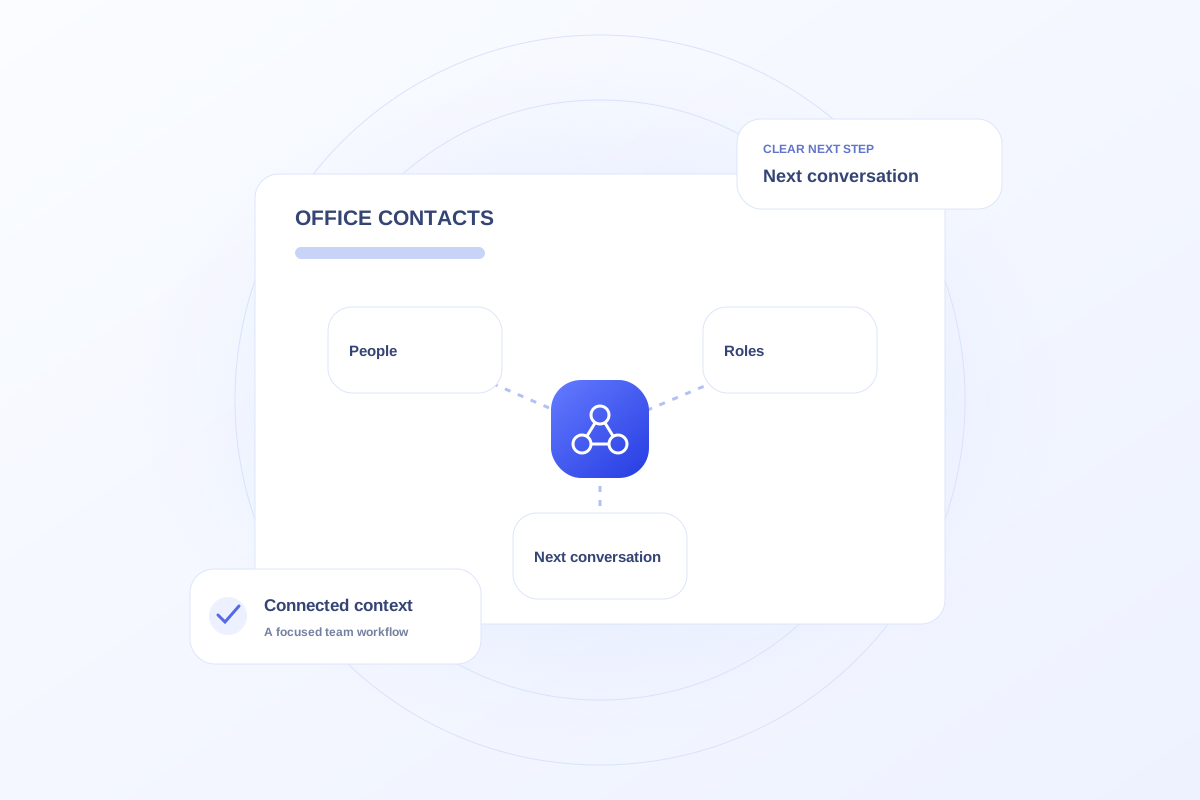
A referring-office contact record should identify the office, relevant professional contacts, roles, preferred administrative contact routes, relationship notes, and open follow-up. Keep factual office information distinct from patient-specific information. Record the source or uncertainty when a detail has not been confirmed.
Separate the office from its people
An office may have several providers and administrative contacts. Record each person’s role so a liaison knows who handles a scheduling question, an office visit, or a referral-process request. Avoid assuming the physician is the right contact for every issue.
If one person changes roles, update the relevant record and review any assignments that depend on that contact. An old name in a copied note should not override a confirmed update.
Keep notes short and attributable
Capture what the office requested, when the conversation occurred, and who recorded it. Distinguish a confirmed preference from a liaison’s suggestion. Use the practice’s approved communication channels and data policies for sensitive information.
A useful note might say that the office requested a current administrative contact list. A vague note such as “prefers a different process” leaves the next person guessing about what was actually said.
Use the record to support the next action
In Ovrflo’s Co-management demo, explore provider and office context alongside outreach history and follow-up. Ask whether a colleague could prepare for the next conversation using the available information.
Contact details need ongoing maintenance. A shared production process should define who verifies changes and how outdated information is corrected; the demo itself stores fictional records only in the current browser.
Your working checklist
- Record contact roles, not just names.
- Separate confirmed details from assumptions.
- Keep patient information in approved patient workflows.
- Assign responsibility for contact updates.
See the workflow in Ovrflo.
Explore the related workspace with fictional data, then discuss what your team would need in practice.