

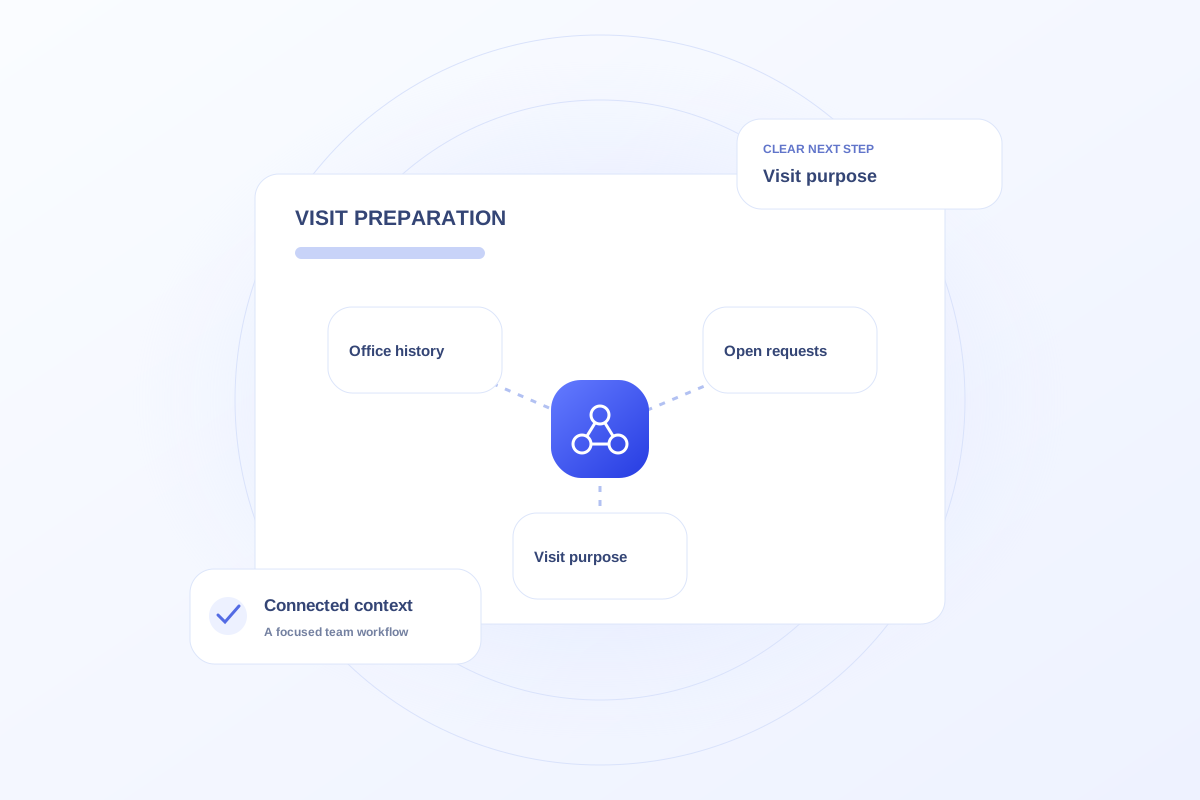
Prepare for a referring-office visit by reviewing the office’s contacts, recent conversations, open requests, and agreed next steps. Choose a specific purpose for the visit and identify anything the practice owes the office. Preparation should help the liaison listen and respond, not simply repeat a standard pitch.
Start with the office’s recorded context
Review who works at the office, how the relationship has developed, and what was discussed previously. Check whether a promised response or requested material is still outstanding. Correct uncertain contact details before using them.
A fictional office that is waiting for referral instructions needs that request addressed before a general introduction. The preparation note should make that context obvious to a colleague covering the visit.
Choose a purpose that fits the relationship
Define the conversation you need to have, such as confirming an administrative process or introducing the correct practice contact. Bring approved materials that support that purpose. Do not invent referral commitments or clinical preferences from an incomplete note.
Leave room for the office’s questions. A preparation plan is a starting point, not a script that prevents the liaison from noticing a new concern.
Leave a usable record for the next visit
Ovrflo’s Co-management workspace brings provider context and outreach planning together in the demo. Review a provider record before opening the day’s visit task to evaluate that sequence.
Afterward, record factual notes and any follow-up owner. The public demo does not contact offices or share records across devices, so use fictional information when trying the workflow.
Your working checklist
- Check contacts and previous conversations.
- Resolve or acknowledge outstanding requests.
- Set a specific purpose for the visit.
- Record the resulting next action and owner.
See the workflow in Ovrflo.
Explore the related workspace with fictional data, then discuss what your team would need in practice.