

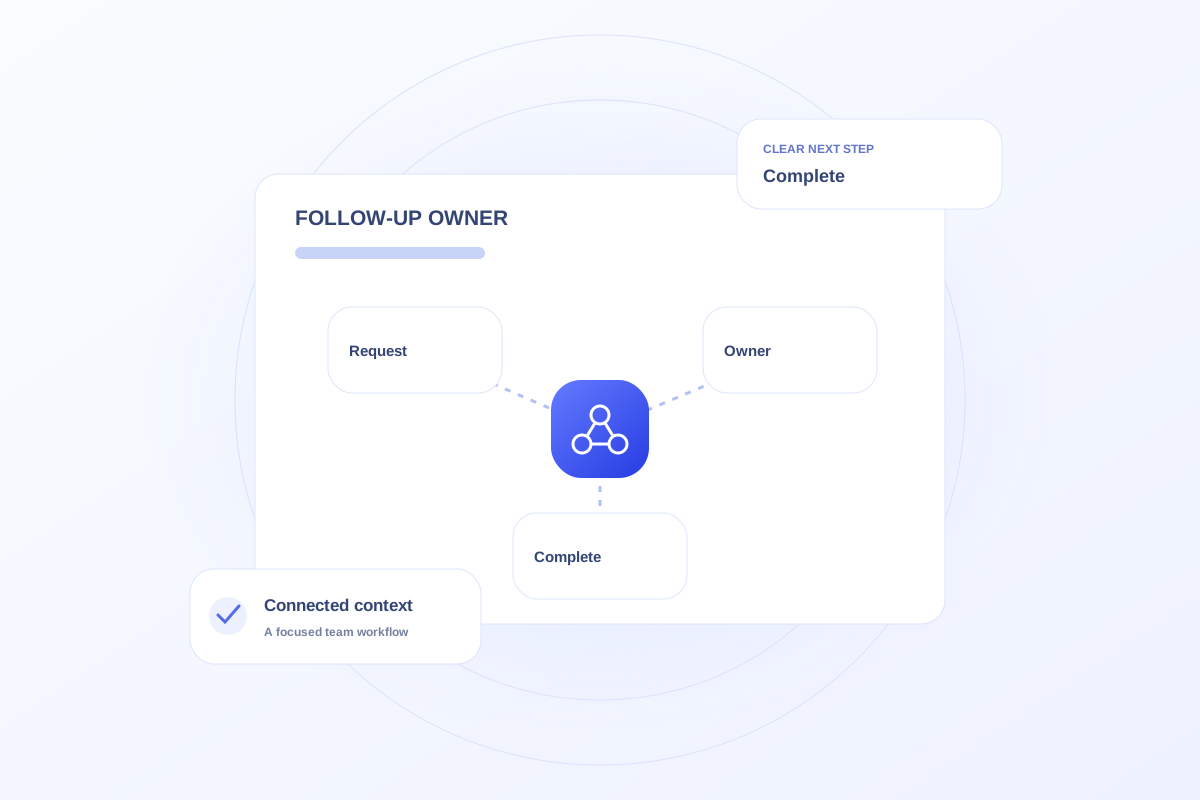
Assign one accountable owner to each referring-office follow-up, even when several people contribute. The owner should know the requested action, due date, dependencies, and how completion will be confirmed. A team name or copied message does not establish that someone has accepted responsibility.
Name the action before assigning the person
Translate the request into a specific next step. “Confirm the current referral instructions with the office” is clearer than “handle referral issue.” Identify whether the work is administrative, relationship-based, or patient-specific before choosing the responsible workflow.
If the request includes several actions, split them where ownership differs. A liaison may own the office response while a coordinator handles a patient-specific step through an approved patient process.
Make dependencies visible
Record what the owner needs from someone else and when that dependency must be resolved. A follow-up can remain overdue because the approval is unclear, not because the owner forgot the task.
If ownership changes, confirm that the incoming person has the context and authority to proceed. Reassigning a record without explaining the request can move the delay rather than resolve it.
Review the result, not only the status
Ovrflo’s personal and team work views offer a way to explore assigned follow-up in Co-management. Use a fictional office request to review the owner, date, and related relationship context.
Agree on what counts as completed. A drafted response and a delivered response are different states. The demo does not send messages to offices, so completing a sample task does not establish external delivery.
Your working checklist
- Write a concrete requested action.
- Assign one accountable owner.
- Record dependencies and the due date.
- Confirm the action actually happened before closing it.
See the workflow in Ovrflo.
Explore the related workspace with fictional data, then discuss what your team would need in practice.