

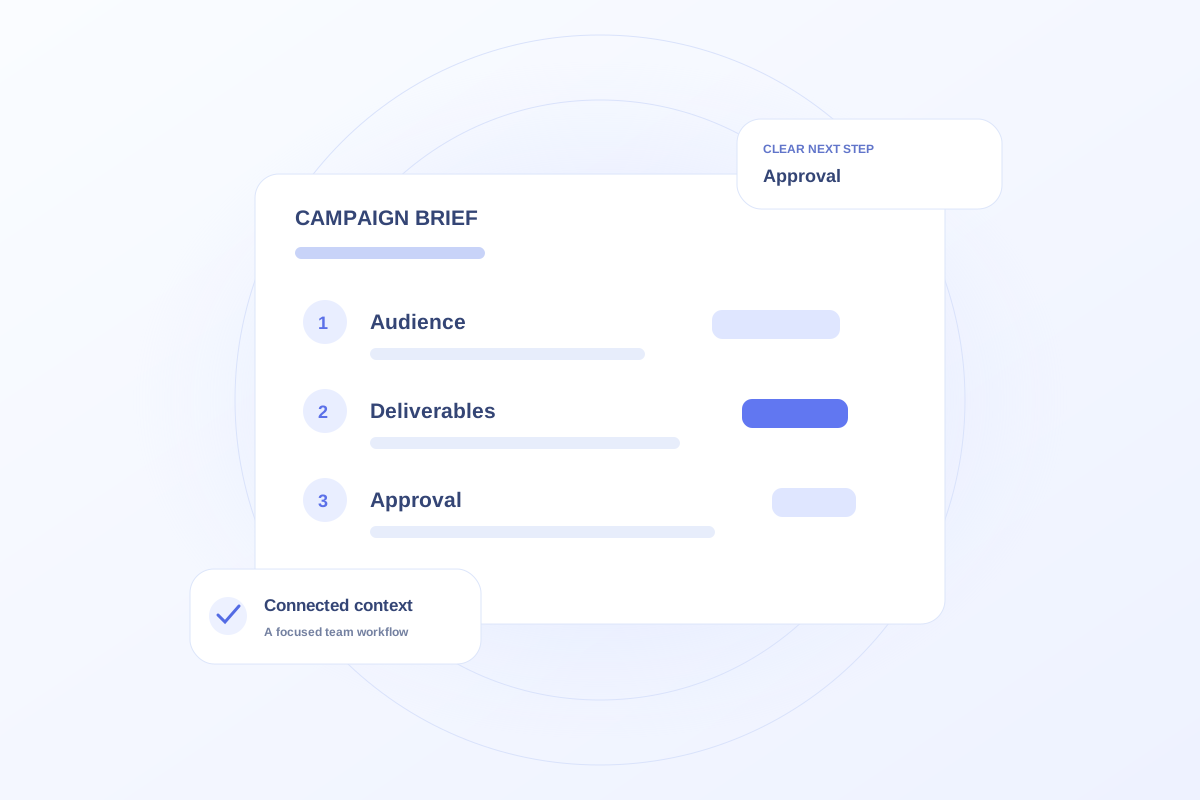
A campaign brief should explain who the campaign is for, what action it should support, what the team will produce, who approves it, and how results will be described. Add timing, vendor dependencies, and a scope boundary. A brief should help someone start the work without guessing.
Name the audience and useful next action
Describe the audience in practical terms, such as people seeking information about evaluation options. Define the action the campaign supports, such as reading an educational page or requesting a conversation. Avoid treating every piece of content as an immediate booking request.
List the factual claims and service details that need review. Patient-facing medical content and advertising claims require the practice’s appropriate reviewers. A marketing brief should identify that review, not substitute for it.
Make the handoff concrete
Specify the deliverables, formats, owner, approval route, and due dates. A landing page, a printed handout, and an event invitation are different assignments even when they share a campaign name.
Include what is outside scope and what must be supplied by the practice. If photography, clinical review, or website access is still missing, mark the dependency explicitly so production dates reflect reality.
Carry the brief into execution
In Ovrflo, a Marketing project can provide context for the tasks and vendors supporting the initiative. Explore how a planning task stays connected to a project rather than becoming an isolated calendar item.
At the review, compare the delivered work with the brief and record what changed. Use the result to improve the next handoff instead of rewriting the original purpose after seeing the report.
Your working checklist
- Define the audience and intended next action.
- List deliverables and the approval owner.
- Record dependencies and scope limits.
- Agree on measurement definitions before launch.
See the workflow in Ovrflo.
Explore the related workspace with fictional data, then discuss what your team would need in practice.