

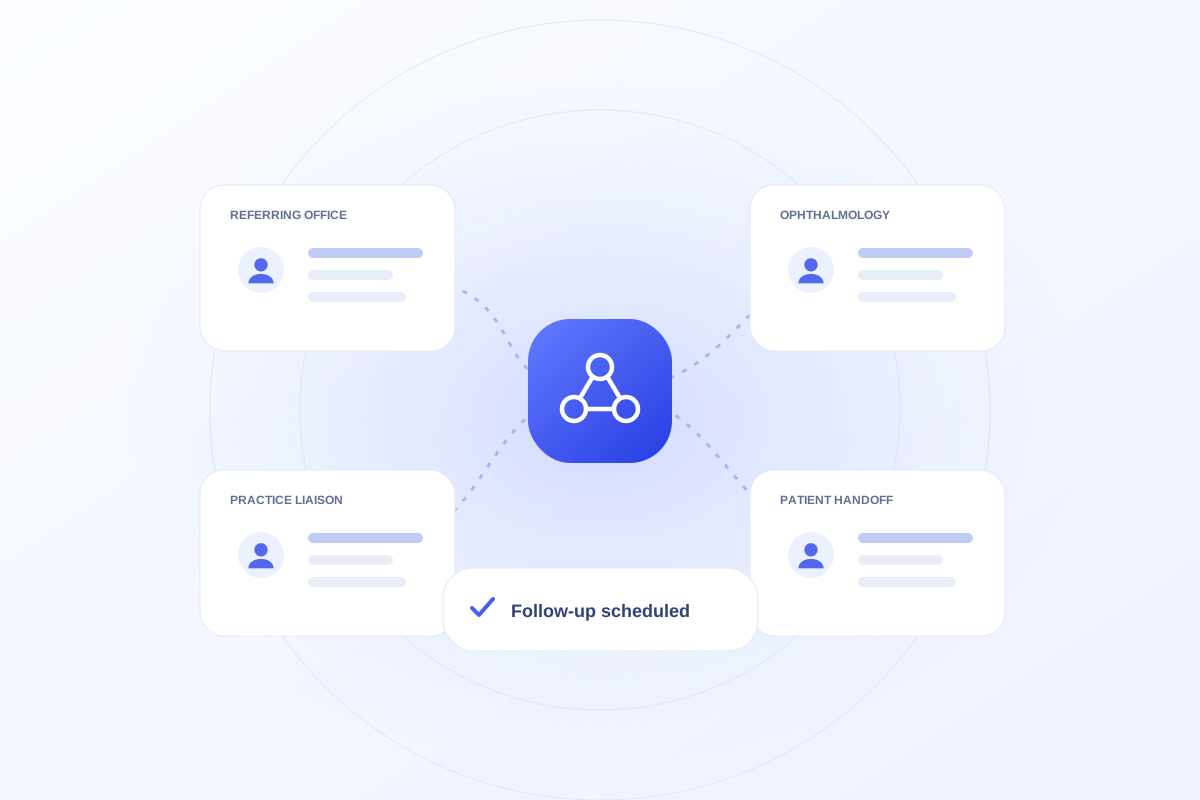
Build referral outreach around a repeatable loop: prepare from the office’s history, record the conversation, assign the next action, and review whether it happened. A visit log is most useful when it helps someone decide what to do next.
Prepare before the visit
Review the referring office’s contacts, previous conversations, open requests, and upcoming commitments. Decide what the visit needs to resolve. An unresolved packet request calls for a different conversation than a routine relationship check-in.
Use an agenda that fits the office and the purpose of the visit. Keep relevant administrative context accessible without copying unnecessary patient information into outreach notes.
Record the next action while it is clear
After the conversation, record the date, office, relevant contacts, and a short factual note. Separate what the office said from your interpretation. Then create the follow-up with an owner and a due date.
For example, “Send the updated referral instructions on Thursday” is actionable. “Great visit” does not tell a colleague what remains. If nothing is required, record that clearly rather than creating a placeholder task.
Review consistency without mistaking activity for results
Review overdue requests and upcoming visits with the team. Look for offices waiting on a response and assignments that have no clear owner. Use the review to resolve handoffs, not simply to count visits.
Referral volume and outreach activity describe different things. A visit followed by referrals does not establish that the visit caused them. Keep referral reporting separate from direct-patient marketing and preserve the original inquiry source.
Your working checklist
- Review the office history before the visit.
- Record factual notes after the conversation.
- Assign requested follow-up to one owner.
- Review overdue commitments with the team.
See the workflow in Ovrflo.
Explore the related workspace with fictional data, then discuss what your team would need in practice.